Glutamate in Food
Food & Nutrition
Send Us A Message
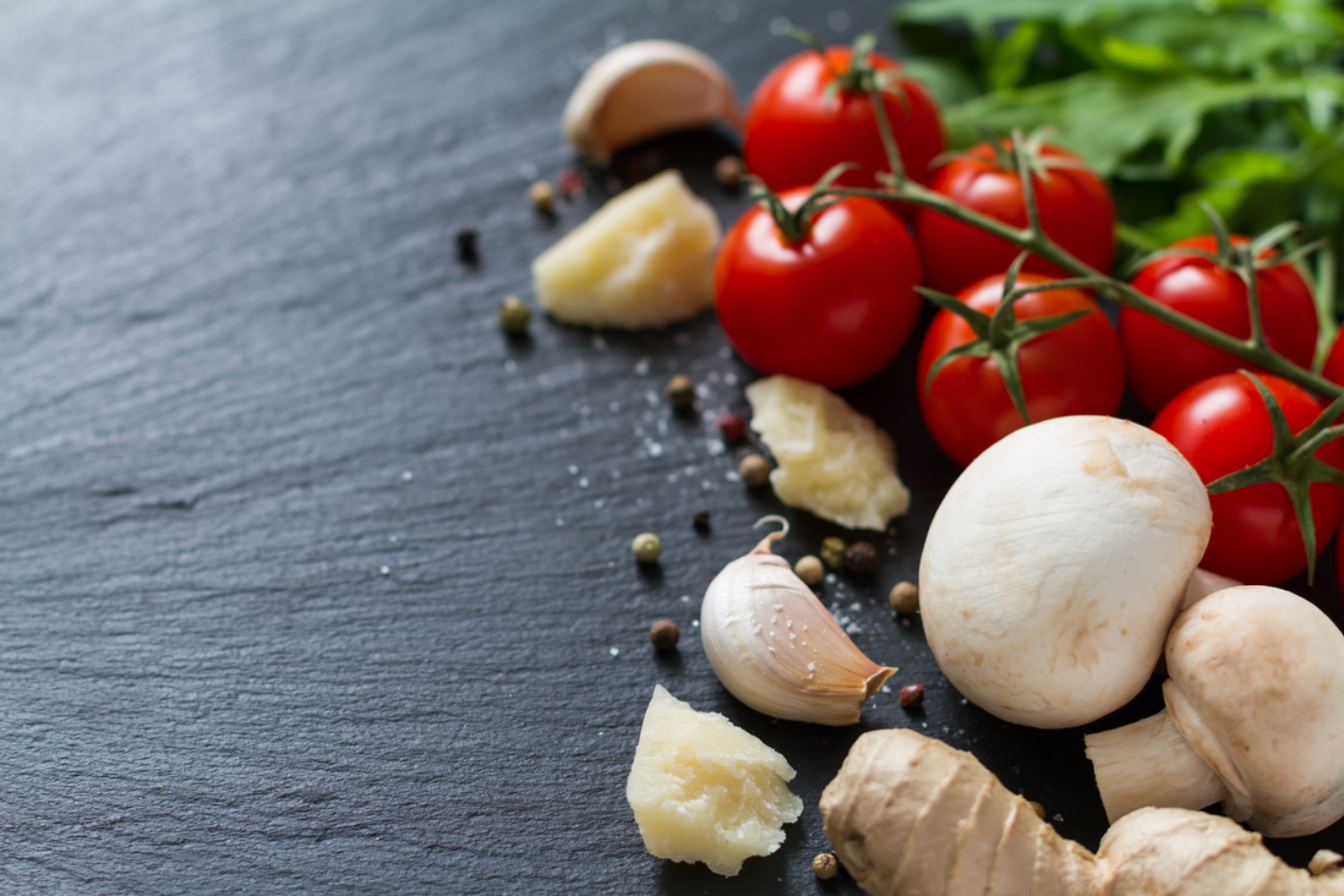
Although virtually every food will contain some amount of glutamate, some foods that are rich in glutamate can easily be combined in your favorite recipes.
Increasing the level of glutamate in a dish during cooking is a simple and effective way to increase umami taste and balance. In recipe development, glutamate is added at levels similar to those in traditional recipes.
Speaking of recipes, check out “Easy Ways to Kick Up Umami Flavor in Your Favorite Dishes.”
The chart below lists some of the most common, glutamate-rich foods, most of which can be found in your local grocery store.
| Free* Glutamate Content of Foods | (mg / 100g) | Free* Glutamate Content of Foods | (mg / 100g) |
| Cow’s milk | 2 | Corn | 106 |
| Human (mother’s) milk | 22 | Potatoes | 102 |
| Chicken | 22 | Broccoli | 176 |
| Beef | 10 | Green peas | 106 |
| Cured ham | 337 | Tomatoes | 246 |
| Pork | 9 | Mushrooms | 180 |
| Oysters | 137 | Chinese cabbage (Napa) | 100 |
| Fish (mackerel) | 215 | Walnuts | 658 |
| Shrimp | 43 | Roquefort cheese | 1280 |
| Scallops | 159 | Parmesan cheese | 1680 |
| Egg yolks | 46 | Cheddar cheese | 182 |
| Green tea | 32 | Fish sauce | 1383 |
| Fresh tomato juice | 260 | Oyster sauce | 900 |
| Grape juice | 258 | Soy sauce | 1264 |
Spot the Difference
Medical specialists have known for decades that your body does not distinguish between the glutamate found naturally in foods and that in MSG. In fact, even today’s state-of-the-art technology can’t separate them. For example, if you analyzed a plate of spaghetti, you could find out the total amount of glutamate in the dish. However, since glutamate is glutamate, there is no way to determine whether the glutamate came from tomatoes, Parmesan cheese, or MSG.
We consume between 10g and 20g of glutamate per day from our diet, of which glutamate from seasoning or condiments is less than 10%. The U.S. Food & Drug Administration notes that a typical serving of a food with added MSG contains less than 0.5 grams of MSG.
Fast Facts: Glutamate is common and abundant throughout nature. It is a component of your body and your foods. Glutamate enhances the natural flavor of many foods, and is most effective when used with savory foods that contain protein (such as meat and vegetable dishes).
Learn more about glutamate here.
Did You Know? By a fermentation process similar to that used for making vinegar, beer, or soy sauce, MSG is produced from natural sources such as starch or molasses derived from sugar beet or sugar cane.
Read about how is MSG made, and is MSG natural?.